Litter Box Diplomacy
The official policy manual for household peace
Litter-box success depends on cleanliness, access, location, box design, cat comfort, and humans who understand that “just use the box” is not a policy.
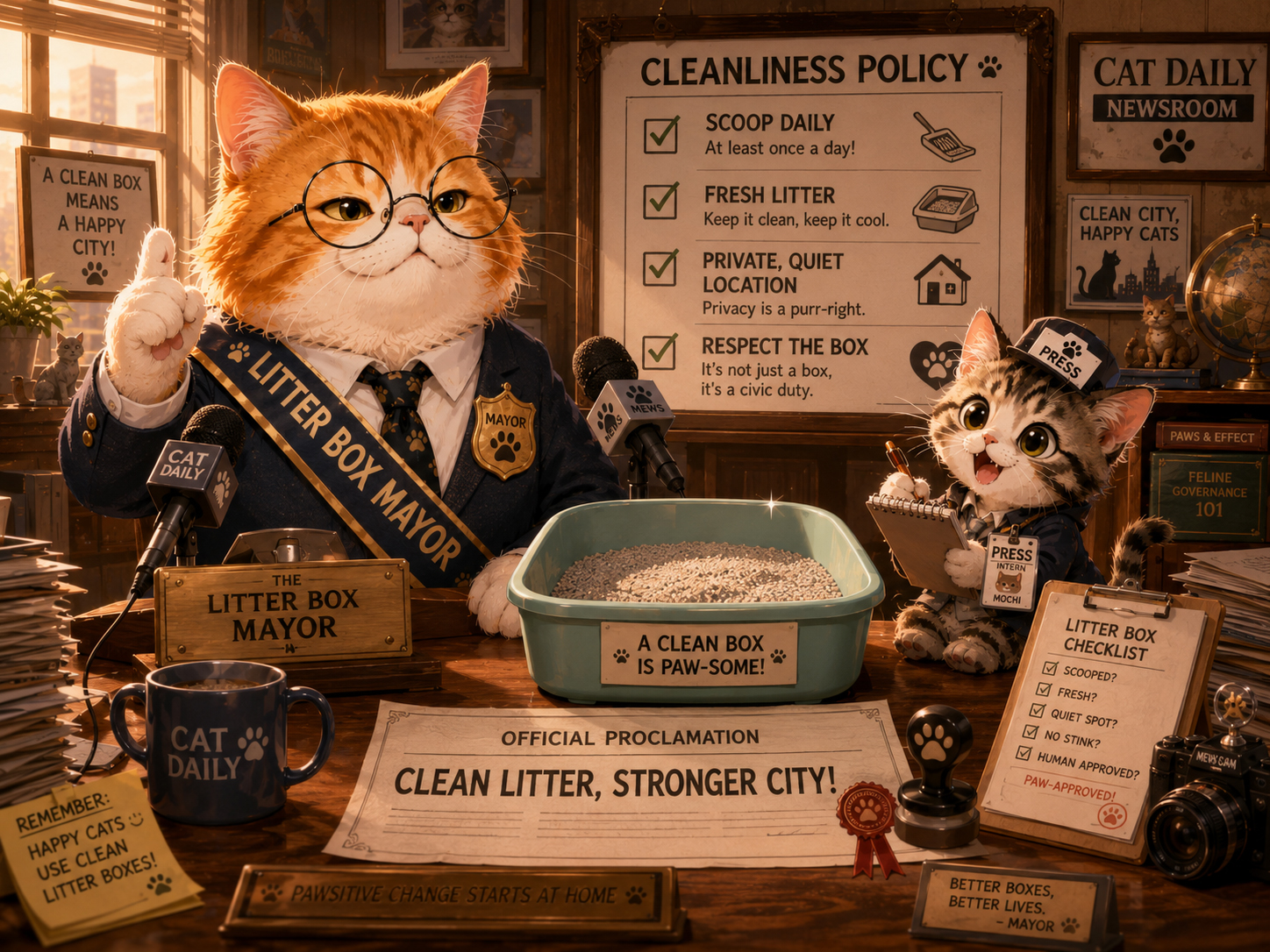
The big idea: the litter box is a health report
The litter box quietly records some of the most important cat-health information in the home. Frequency, amount, stool quality, urine changes, odor, straining, accidents, and avoidance all matter.
The mayor’s first rule is: do not assume bad manners before considering health, stress, access, cleanliness, and location. A cat who avoids the box may be telling you the box is wrong, the route is wrong, the household is stressful, or the cat does not feel well.
The Litter Box Mayor’s official checklist
| Policy Area | Good Human Practice | CatDaily Translation |
|---|---|---|
| Cleanliness | Scoop daily and refresh litter as needed. | The public works department must show up. |
| Location | Choose a quiet, accessible, low-stress place. | No cat wants a bathroom next to a marching band. |
| Access | Make the box easy to enter, especially for kittens and senior cats. | The door to City Hall should not require gymnastics. |
| Number of boxes | Provide enough boxes for the household and avoid resource guarding. | One public restroom for a whole city is poor planning. |
| Box size | Use a box large enough for comfortable turning and digging. | The mayor rejects cramped infrastructure. |
| Change detection | Notice straining, accidents, diarrhea, constipation, or blood. | The box is filing a health bulletin. |
Cleanliness: scoop daily, avoid scandal
Many cats prefer a clean box. A box that smells bad, feels dirty, or is not maintained can lead to stress or avoidance. Scoop daily, refresh litter as needed, and clean the box on a sensible schedule.
The Litter Box Mayor is not asking for marble floors and a municipal fountain. The mayor is asking that the facility not look like it was abandoned during a budget crisis.
Location: private, quiet, and easy to reach
Cats usually prefer a box in a calm place where they feel safe. Avoid loud machinery, trapped corners, high-traffic chaos, scary pets, or locations that require difficult stairs for a kitten, senior cat, or cat with mobility issues.
A good box location lets the cat enter and leave comfortably. If another pet can block the route, the location may become a diplomatic crisis.
Box design: the cat gets a vote
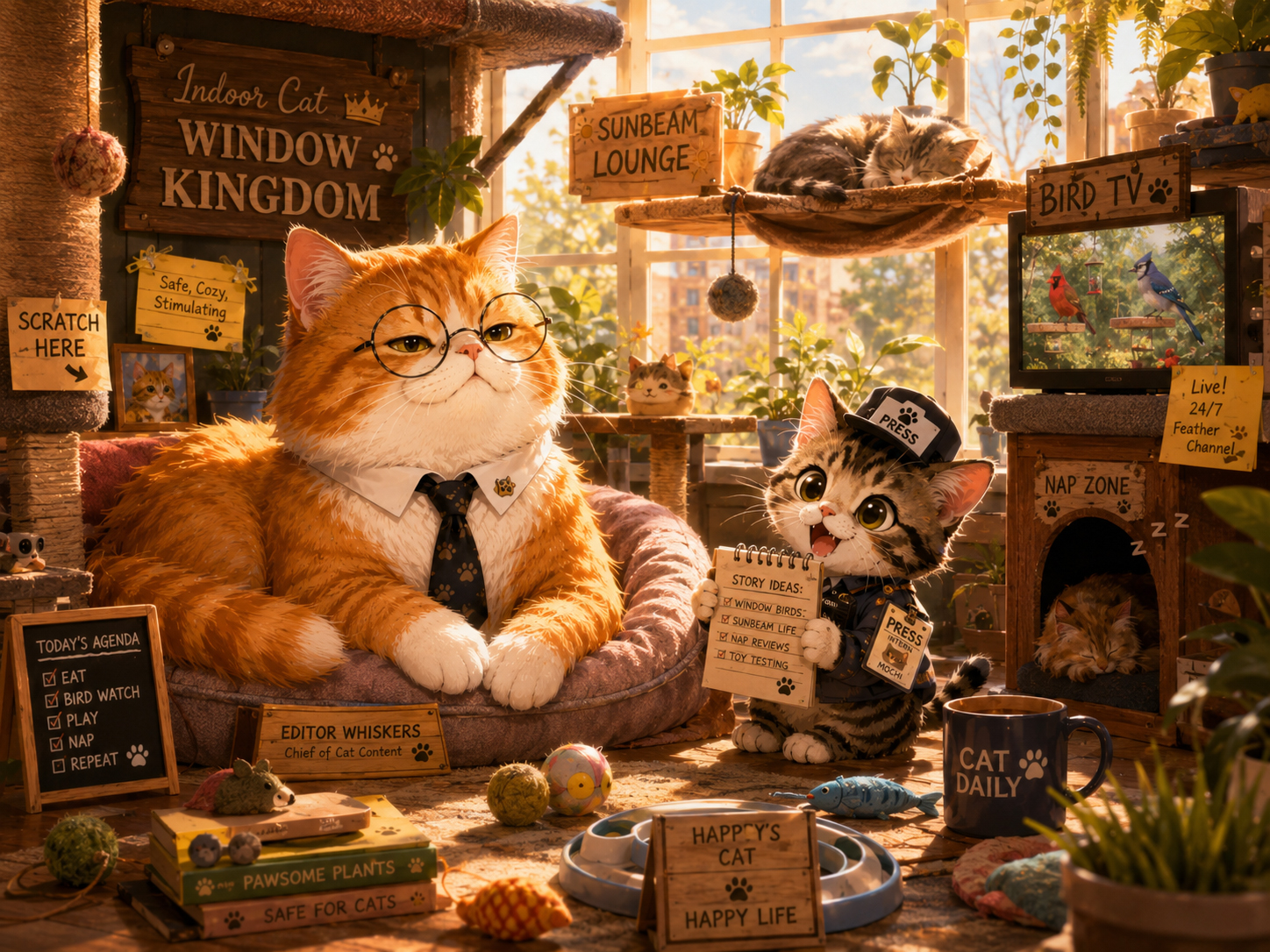
Some cats prefer open boxes. Some tolerate covered boxes. Some dislike liners, strong scents, tight entryways, or boxes that feel too small. The cat’s preference matters because the cat is the actual user of the facility.
If a box problem begins after a new box, new litter, new location, or new cleaning product, treat that timing as evidence. Editor Whiskers recommends reading the file before blaming the citizen.
Kittens: keep the box close and easy
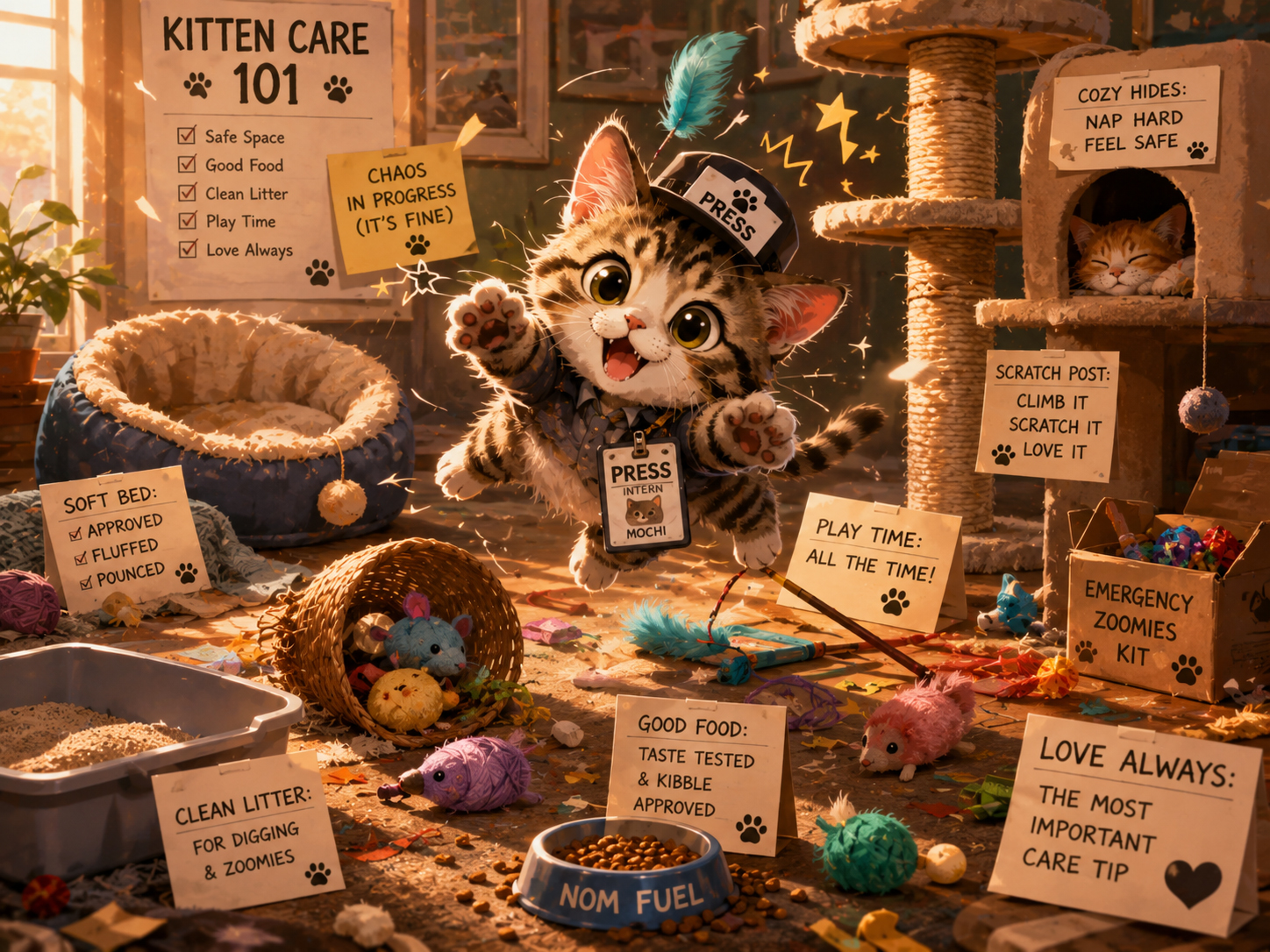
Kittens need easy access. Use low sides and keep the box near the kitten’s early safe space. A tiny kitten should not have to cross an entire house while also remembering where the public works department is located.
Senior cats: dignity begins with easy access
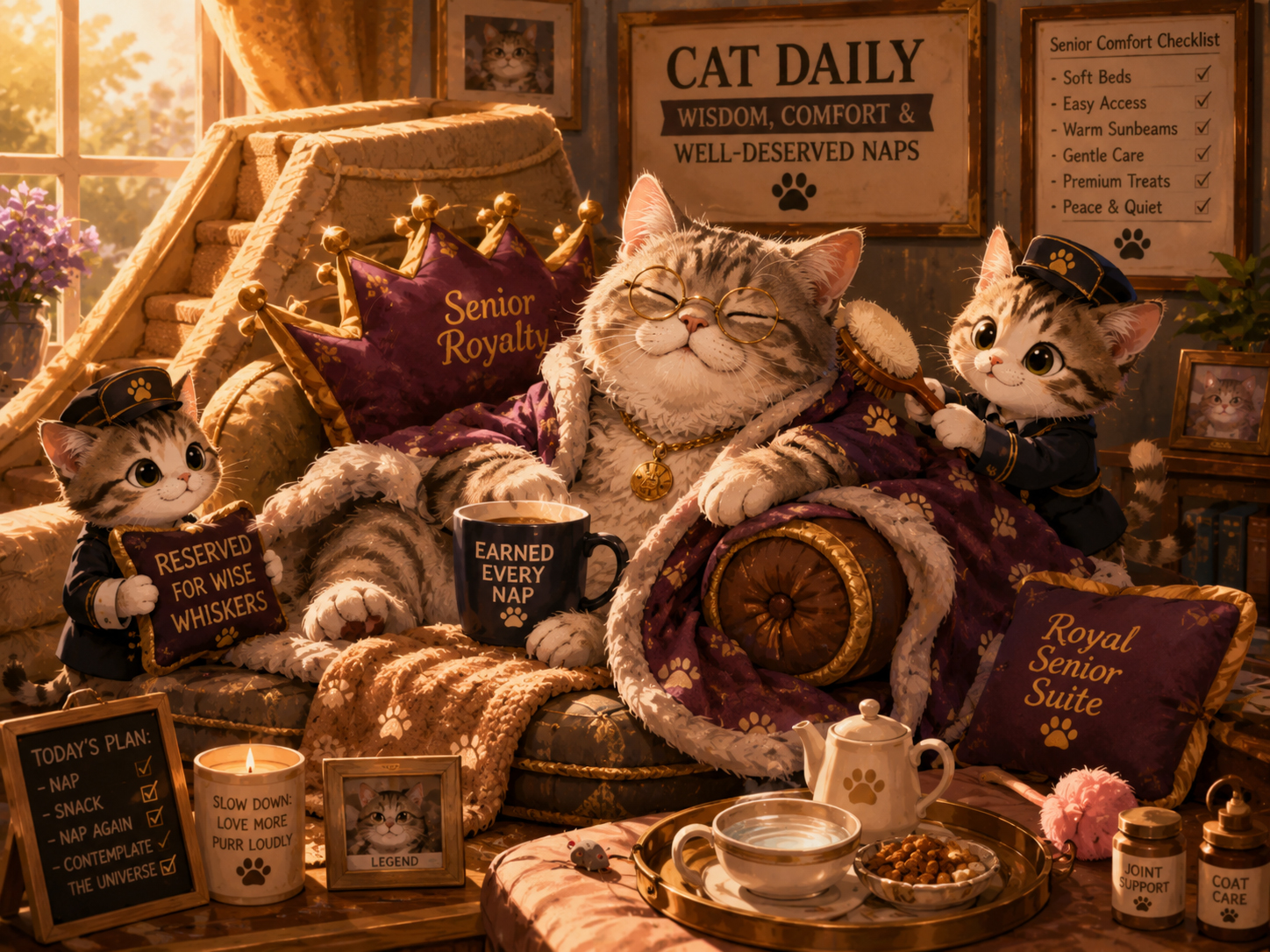
Senior cats may struggle with high-sided boxes, stairs, slick floors, long distances, or awkward corners. A low-entry box, stable footing, nearby placement, and quiet environment can make a major difference.
If a senior cat starts missing the box, do not assume age or stubbornness. Pain, arthritis, urinary issues, constipation, stress, or poor access may be involved.
Multi-cat homes: more cats, more infrastructure
In multi-cat households, litter-box conflict can be obvious or subtle. One cat may block a hallway, guard a box, stare another cat away, or make a location feel unsafe.
Multiple boxes in different areas can reduce pressure. The goal is not one giant bathroom empire. The goal is choice, access, and peace.
Accidents: investigate, do not prosecute
When a cat urinates or defecates outside the box, the response should be investigation, not punishment. Punishment can increase fear and stress, and it does not explain the cause.
Look at health, box cleanliness, location, litter type, stress, household changes, access, mobility, other pets, and recent changes. Clean accidents thoroughly with appropriate products so odor does not keep calling the cat back to the scene.
Stress and household changes
Moving, new pets, new people, visitors, construction, loud noise, schedule changes, or conflict between cats can affect litter-box behavior. Cats often communicate stress through routines.
Provide safe spaces, predictable routines, and enough resources. Professor Purr says the litter box is often where household stress signs become visible.
Litter-box red flags
The mayor’s official departments
Clean and maintained
Scoop daily, refresh litter, wash the box when needed, and do not let odor run City Hall.
Location matters
Use quiet, accessible places with safe entry and escape routes. No scary bottlenecks.
Watch changes
Straining, accidents, diarrhea, constipation, blood, or frequency changes are not gossip. They are evidence.
Multi-cat peace
Give cats enough boxes, space, and routes so nobody has to negotiate under pressure.
Closing proclamation
Litter-box diplomacy is not glamorous, but it is one of the most important parts of cat care. A clean, accessible, quiet, cat-approved box can protect comfort, reduce stress, and reveal health clues early.
The mayor’s final decree: scoop daily, respect privacy, watch the evidence, call the vet when red flags appear, and remember that no stable civilization is built on neglected litter.