Cat Behavior
The human translation desk for feline mysteries
Cats are not random. They are patterned, opinionated, sensitive, territorial, playful, cautious, and occasionally powered by invisible lightning.
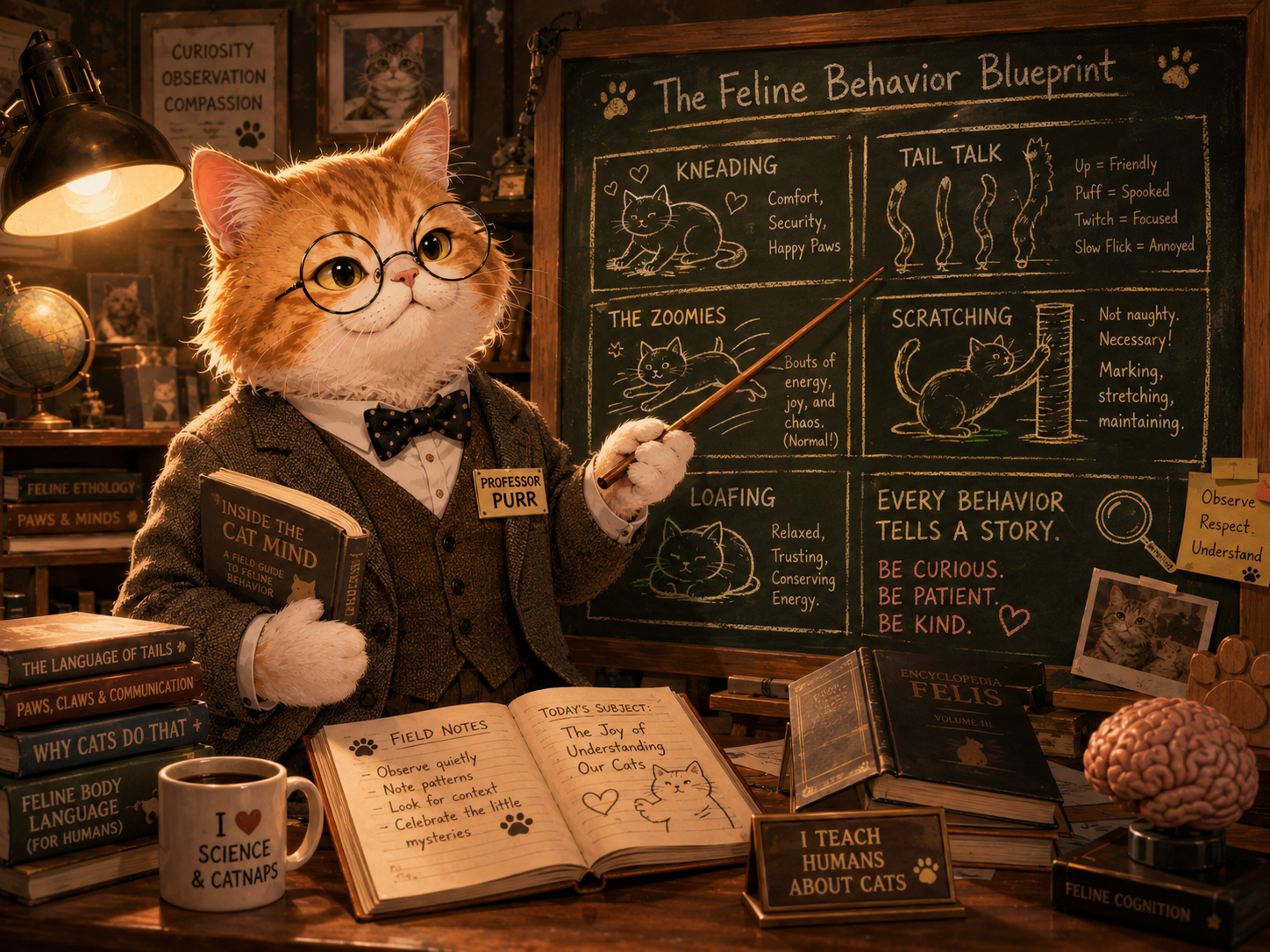
The big idea: observe before judging
A cat’s behavior usually makes more sense when humans slow down and look at the whole situation. What happened before the behavior? Where did it happen? Who was nearby? Was there noise, hunger, pain, boredom, another animal, a dirty litter box, or a new routine?
Professor Purr calls this “context before conclusion.” Editor Whiskers calls it “please stop accusing the cat without reading the evidence.”
CatDaily behavior map
| Behavior | Common Meaning | Human Response |
|---|---|---|
| Kneading | Comfort, relaxation, security, affection, or happy paws. | Enjoy the biscuit factory. Use a blanket if claws are enthusiastic. |
| Scratching | Stretching, marking, claw care, stress relief, and normal cat behavior. | Provide good scratchers near important areas. Reward the right target. |
| Zoomies | Energy release, play drive, routine excitement, or post-litter-box celebration. | Offer play before peak chaos. Keep pathways safe. |
| Hiding | Rest, fear, stress, illness, pain, or need for safety. | Provide safe hiding places. Watch for sudden or extreme changes. |
| Slow blink | Relaxation, trust, and soft social communication. | Slow blink back. Do not ruin the sacred moment by grabbing the cat. |
| Tail flick | Interest, irritation, focus, conflict, or overstimulation. | Pause. Read the rest of the body. The tail has filed a memo. |
Scratching is not vandalism
Scratching is normal. Cats scratch to stretch, maintain claws, mark territory, release tension, and feel good. The solution is not to scold the cat into becoming furniture-neutral. The solution is to provide better scratching options and place them where the cat actually wants to scratch.
Scratchers should be stable, appealing, and located near high-value cat zones: sleeping areas, windows, entrances, or the famous sofa corner currently under litigation.
The zoomies: tiny thunder with whiskers
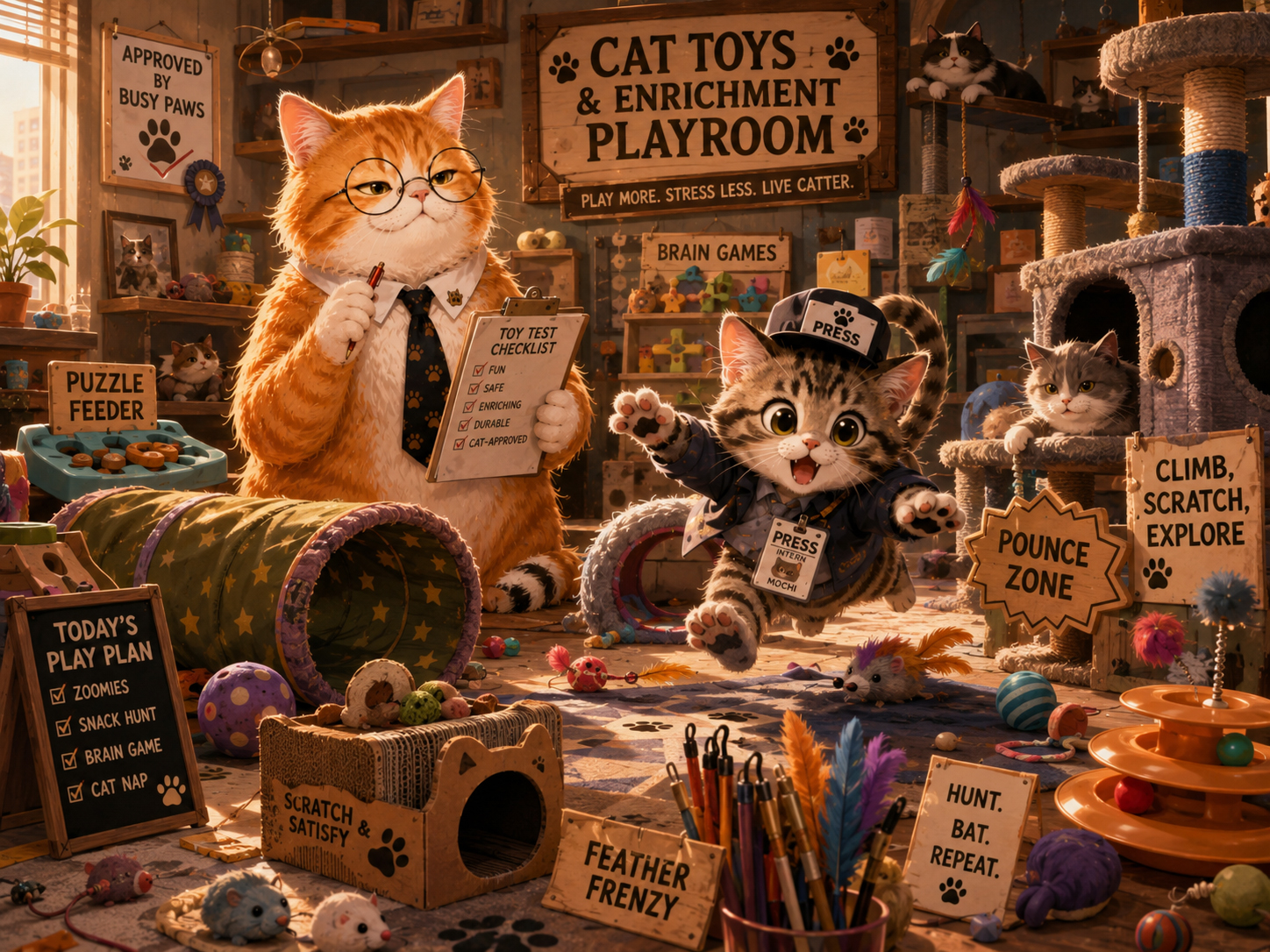
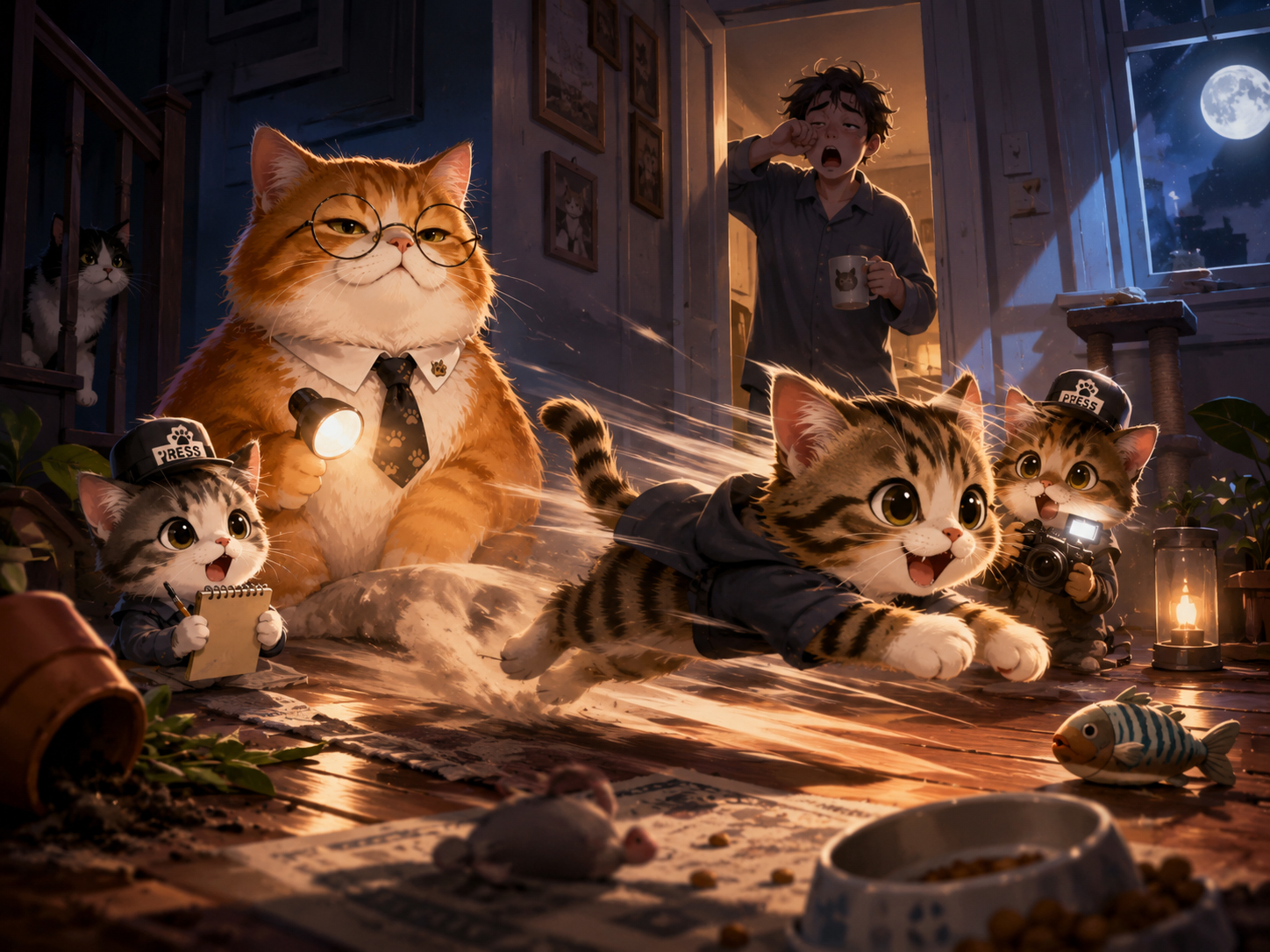
Zoomies are bursts of energy. They may happen after meals, after using the litter box, during evening play cycles, or when the cat remembers it is technically a predator inside a carpeted apartment.
Normal zoomies are often playful and brief. Help by offering interactive play, tunnels, safe running paths, climbing options, and routine. If zoomies come with distress, pain, disorientation, aggression, or sudden major change, treat that as a clue worth investigating.
Tail talk: the flagpole of feelings
A cat’s tail can show confidence, friendliness, focus, irritation, fear, excitement, or conflict. A relaxed upright tail may be friendly. A puffed tail can mean fear or alarm. A twitching tail may show focus or irritation. A slow flick may mean “please stop doing that thing you are doing.”
Tail signals are best read with ears, eyes, whiskers, body posture, vocalization, and the situation. One tail move is not the whole newspaper. It is a headline.
Kneading: the biscuit desk
Kneading is often a comfort behavior connected to relaxation and security. Some cats knead blankets. Some knead humans. Some knead with the intensity of a bakery trying to meet a holiday rush.
If claws are sharp, place a soft blanket between cat and human. Do not punish happy paws. The biscuit desk operates under ancient feline law.
Loafing: fully tucked, fully operational
The loaf position often means a cat feels settled enough to rest while staying alert. A loaf can be relaxed. A tense loaf with pain signs, hiding, reduced appetite, or unusual stillness can mean something else. Context matters.
Professor Purr notes that not all loaves are equal. Some are cozy bread. Some are suspicious bread.
Hiding: privacy, fear, or a health clue
Hiding can be normal, especially when cats nap, avoid noise, or choose quiet time. Safe hideouts are healthy. A cat should have private places where humans do not drag them into democracy.
Sudden hiding, hiding with appetite changes, hiding with litter-box changes, or hiding with weakness, pain, or breathing changes should be taken seriously.
The Vacuum Monster: fear and loud household events
Some cats are startled by loud machines, visitors, construction, fireworks, storms, or household changes. The goal is not to force bravery. The goal is to provide safe retreat options and avoid trapping the cat near frightening noise.

Indoor behavior: build a better kingdom
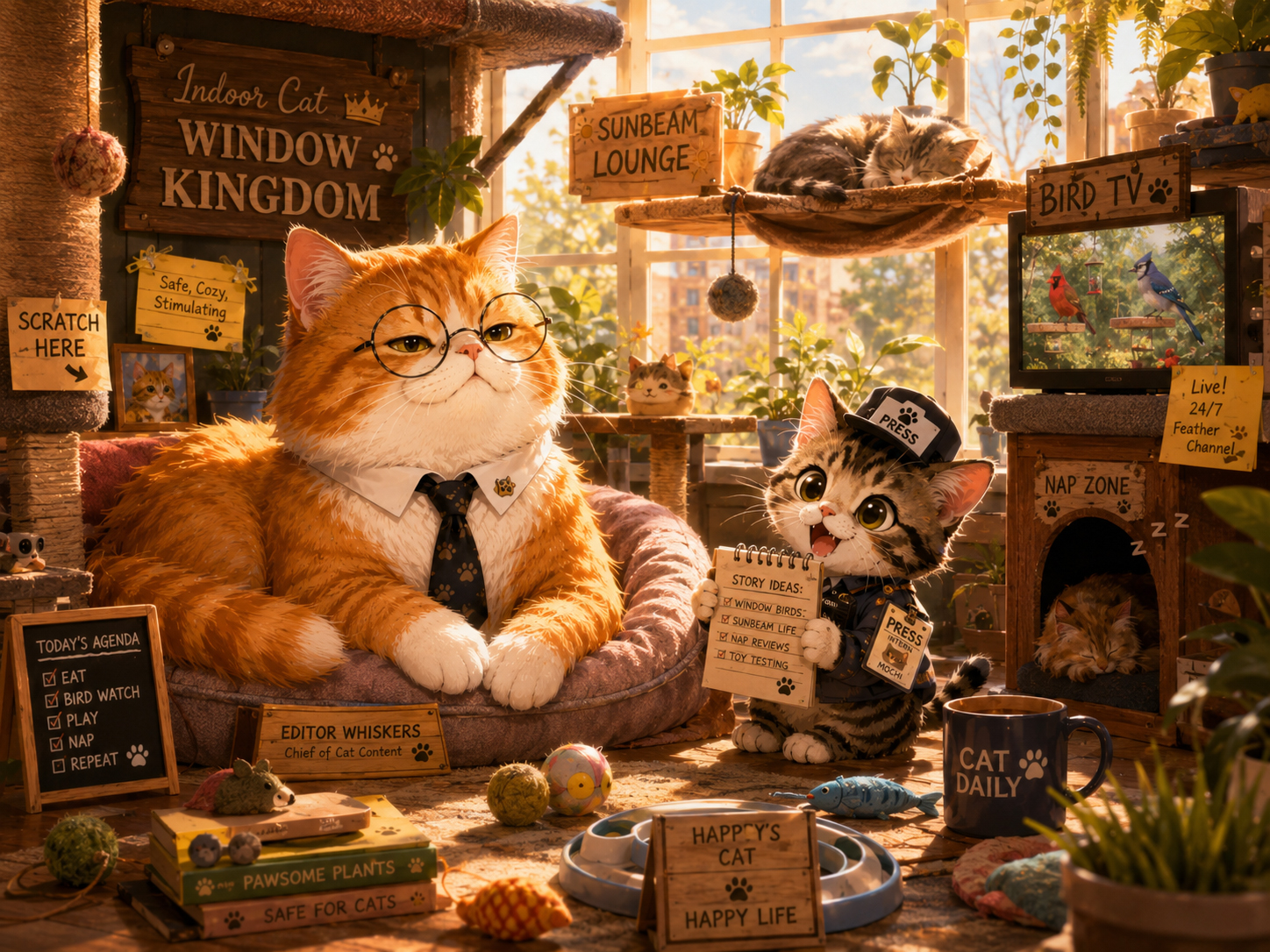
Indoor cats need outlets for normal feline behavior: watching, climbing, scratching, hiding, stalking, pouncing, chewing appropriate things, resting, and patrolling. A bored cat may invent entertainment. The invented entertainment may involve your curtains.
Good indoor life includes safe window views, cat trees, scratchers, toys, food puzzles, resting spots, and predictable attention. The goal is not to exhaust the cat. The goal is to give the cat a meaningful little kingdom.
Multi-cat diplomacy
Cats sharing a home need enough resources. Food stations, water stations, litter boxes, resting spots, scratchers, and escape routes all matter. Conflict can be obvious, but it can also be subtle: blocking doorways, guarding resources, staring, chasing, or quietly making one cat avoid an area.
The CatDaily diplomatic formula is simple: more resources, more vertical space, more choice, and fewer forced negotiations in narrow hallways.
Behavior red flags
Professor Purr’s human homework
Read the full scene
Look at body language, environment, timing, triggers, and routine. The cat left clues everywhere.
Give good outlets
Scratching, climbing, hiding, toys, food puzzles, perches, and safe spaces reduce household nonsense.
Choice matters
Let cats approach, retreat, rest, and say no. Consent is not only for people with thumbs.
Change is information
Sudden behavior change can be a health clue. Do not let comedy hide a real concern.
Closing lecture: the cat is not broken
Many cat behaviors are normal responses to normal cat needs. Scratching, hiding, kneading, pouncing, patrolling, and watching the world are not problems by themselves. Problems often appear when the home does not give the cat enough safe ways to be a cat.
Professor Purr’s final rule: be curious, be patient, be kind, and remember that every behavior tells a story. Some stories are about stress. Some are about health. Some are about boredom. Many are about tuna.