Health Basics
The human’s field guide to “is my cat okay?”
Cats are experts at acting mysterious. Health basics help humans separate normal cat drama from changes that deserve real attention.
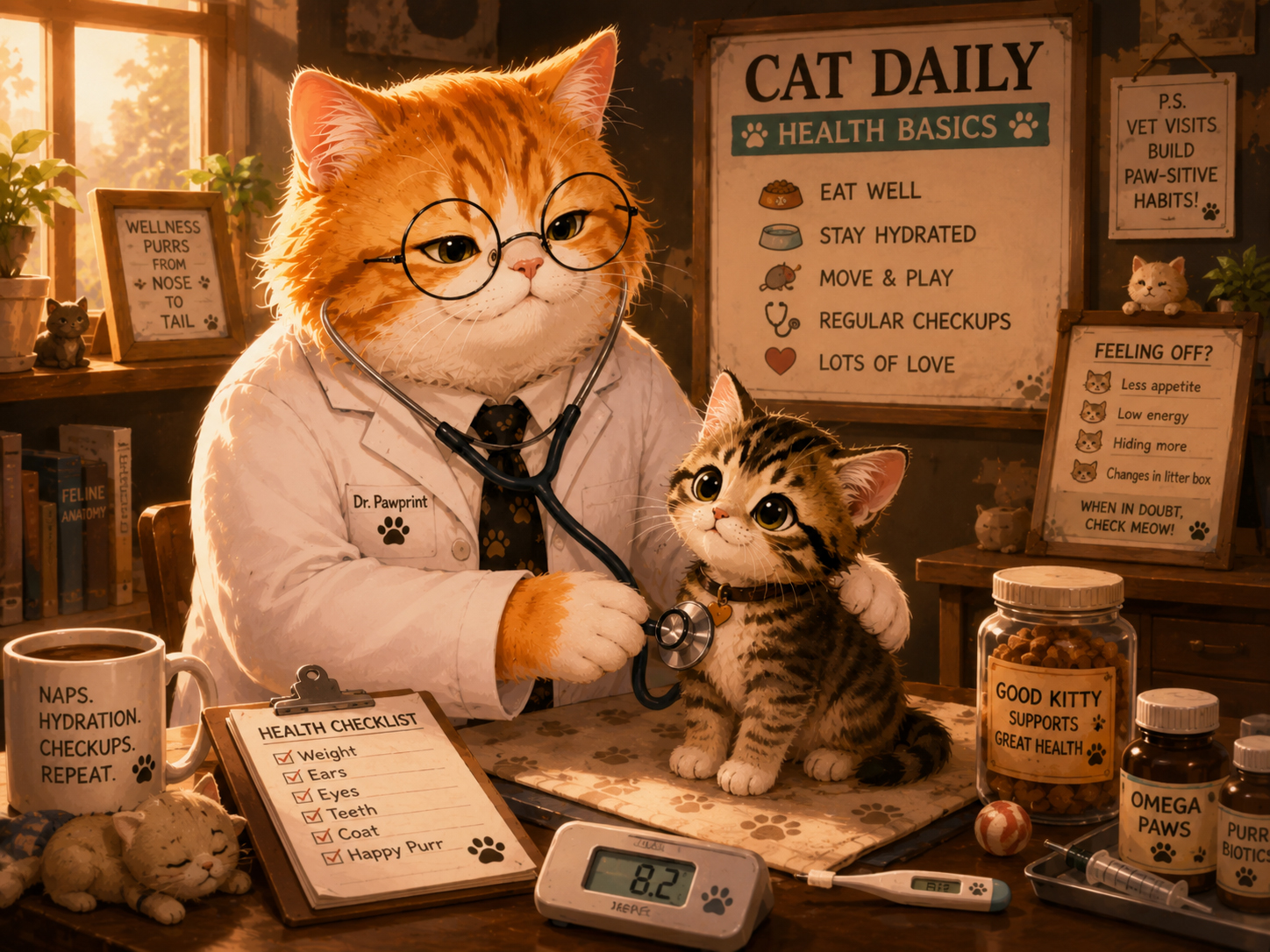
Start with “normal”
The first rule of cat health is simple: know your cat’s normal routine. Some cats are loud. Some are quiet. Some are athletic window panthers. Some are professional pillows. What matters most is a noticeable change from that cat’s usual pattern.
Dr. Pawprint calls this the “daily pawprint report.” Appetite, water intake, litter-box use, grooming, energy, breathing, posture, and mood are the headlines.
The CatDaily health checklist
| Daily Clue | Healthy Pattern | Watch For |
|---|---|---|
| Appetite | Eating a normal amount for that cat. | Refusing food, sudden hunger change, difficulty chewing, or interest in food but not eating. |
| Water | Regular drinking and normal hydration habits. | Sudden heavy drinking, no drinking, drooling, or signs of dehydration. |
| Litter box | Consistent urination and stool habits. | Straining, crying, frequent trips, accidents, diarrhea, constipation, blood, or no urine. |
| Energy | Normal play, sleep, curiosity, and social habits. | Lethargy, hiding, weakness, collapse, unusual aggression, or dramatic withdrawal. |
| Grooming | Coat looks clean and cared for. | Matted fur, greasy coat, overgrooming, bald patches, itching, or not grooming. |
| Breathing | Quiet, comfortable breathing at rest. | Open-mouth breathing, fast breathing, wheezing, coughing, blue/pale gums, or distress. |
Food: the bowl is news, but the pattern is the story
A single skipped snack may not always mean disaster, but a cat that stops eating can become serious quickly. Watch whether your cat is avoiding food entirely, trying to eat but struggling, chewing on one side, drooling, hiding near food, or suddenly demanding much more than usual.
Madame Tuna has opinions about texture and aroma. Dr. Pawprint has a more practical view: food changes should be gradual when possible, treats should not replace balanced meals, and sudden appetite changes deserve attention.
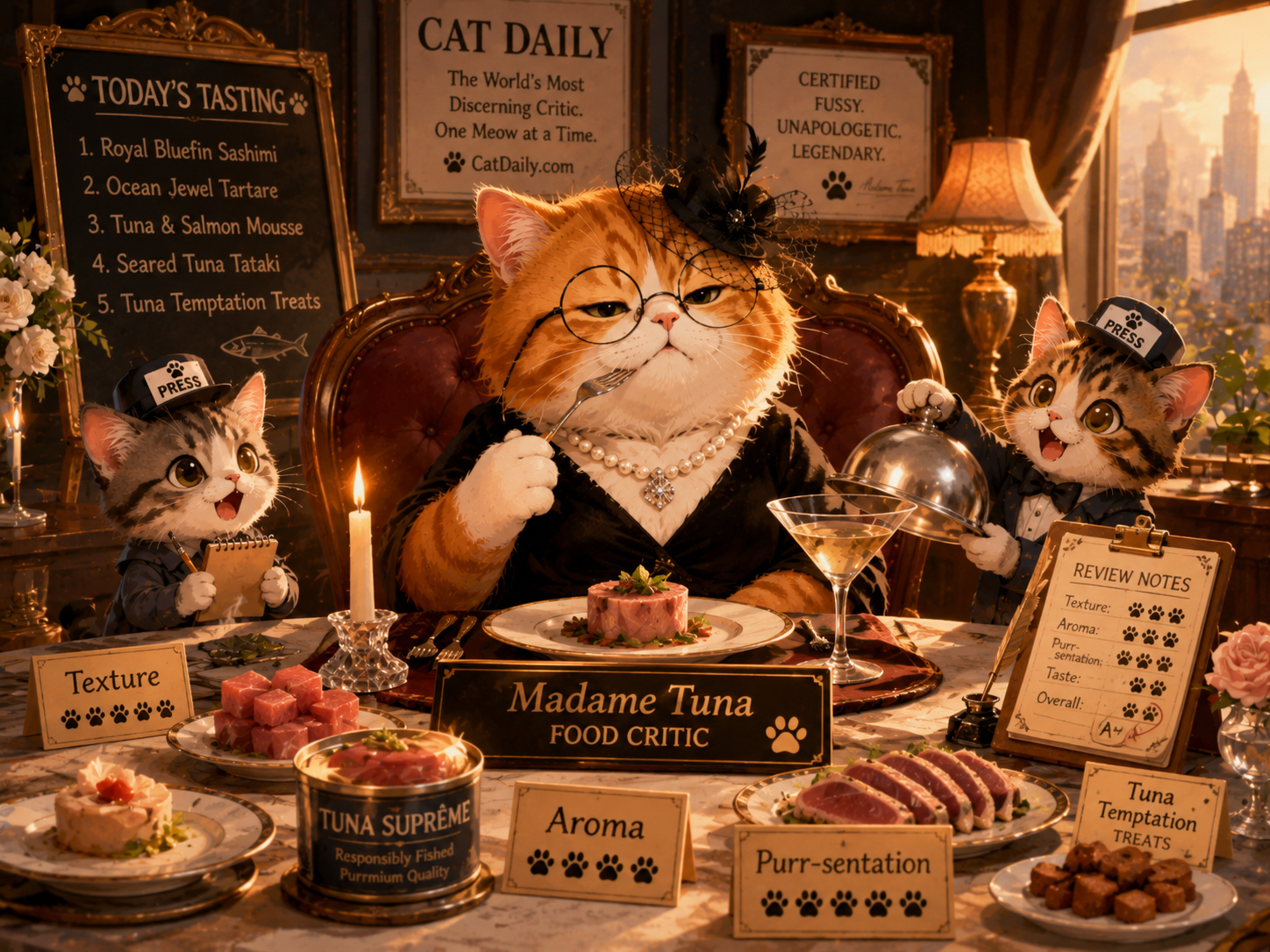
Water: hydration is not optional, even for royalty
Cats may be subtle drinkers, especially if they eat wet food. Still, water access matters. Keep fresh water available, clean bowls regularly, and notice sudden changes in drinking. Drinking far more than usual can be a sign that something needs veterinary review.
Some cats prefer wide bowls, fountains, multiple water stations, or water placed away from food. The cat may not explain this politely. The cat may simply stare at the bowl as if it has committed a crime.
Litter box: the municipal records office
The litter box is one of the clearest health-reporting systems in the house. Changes in frequency, amount, odor, stool quality, urine appearance, or box avoidance can point to medical, stress, mobility, or cleanliness issues.
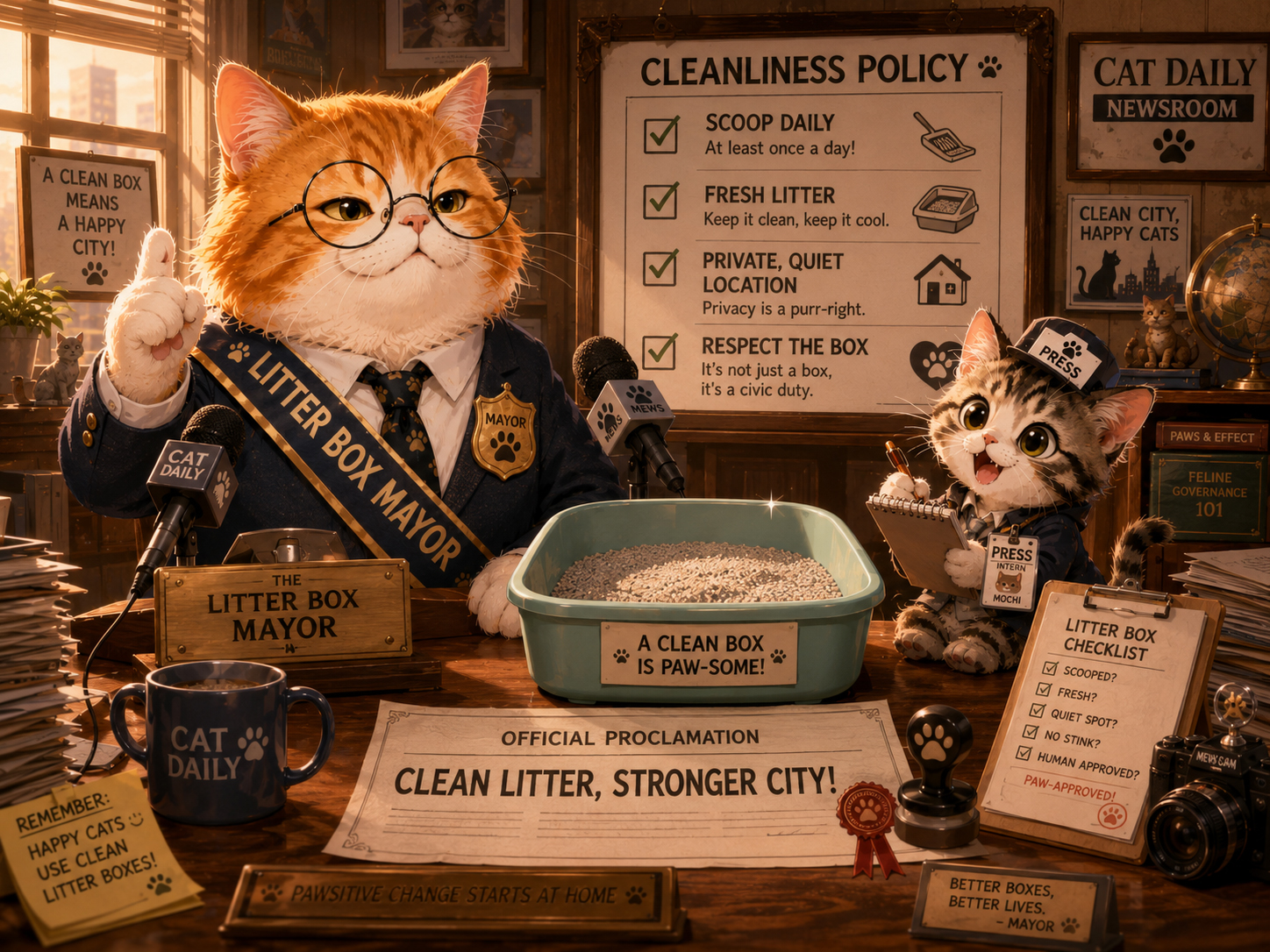
The Litter Box Mayor’s policy is blunt: clean box, quiet location, enough boxes, and no pretending the problem is “just attitude” before ruling out health issues.
Play and enrichment: health is not only medicine
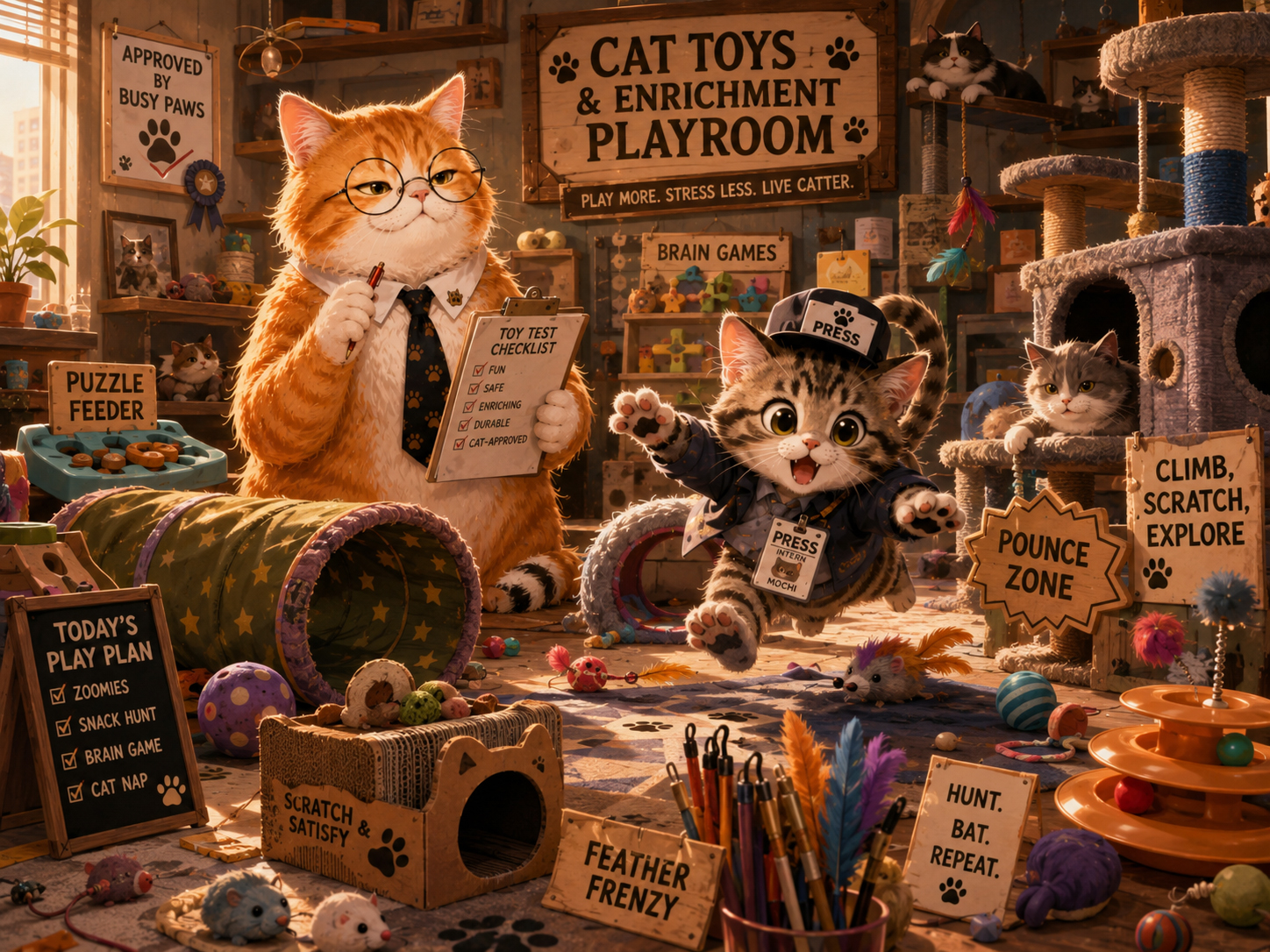
Movement, play, scratching, climbing, hiding, hunting games, and window watching help support a cat’s physical and emotional life. Indoor cats need safe outlets for normal feline behavior.
Toys do not need to be expensive. A wand toy, puzzle feeder, cardboard box, safe perch, scratcher, tunnel, and regular human play can turn a bored couch lion into a dignified domestic tiger.
Grooming, coat, eyes, ears, and teeth
A healthy cat often keeps the coat in good condition. Changes such as matting, dandruff, greasy fur, overgrooming, bald spots, sores, head shaking, squinting, discharge, bad breath, or difficulty eating can be clues that something is wrong.
Long-haired cats, senior cats, overweight cats, and cats with pain or mobility issues may need more help with grooming. The cat may appreciate the help. The cat may also file a formal complaint. Proceed gently.
Senior cats need comfort and closer observation
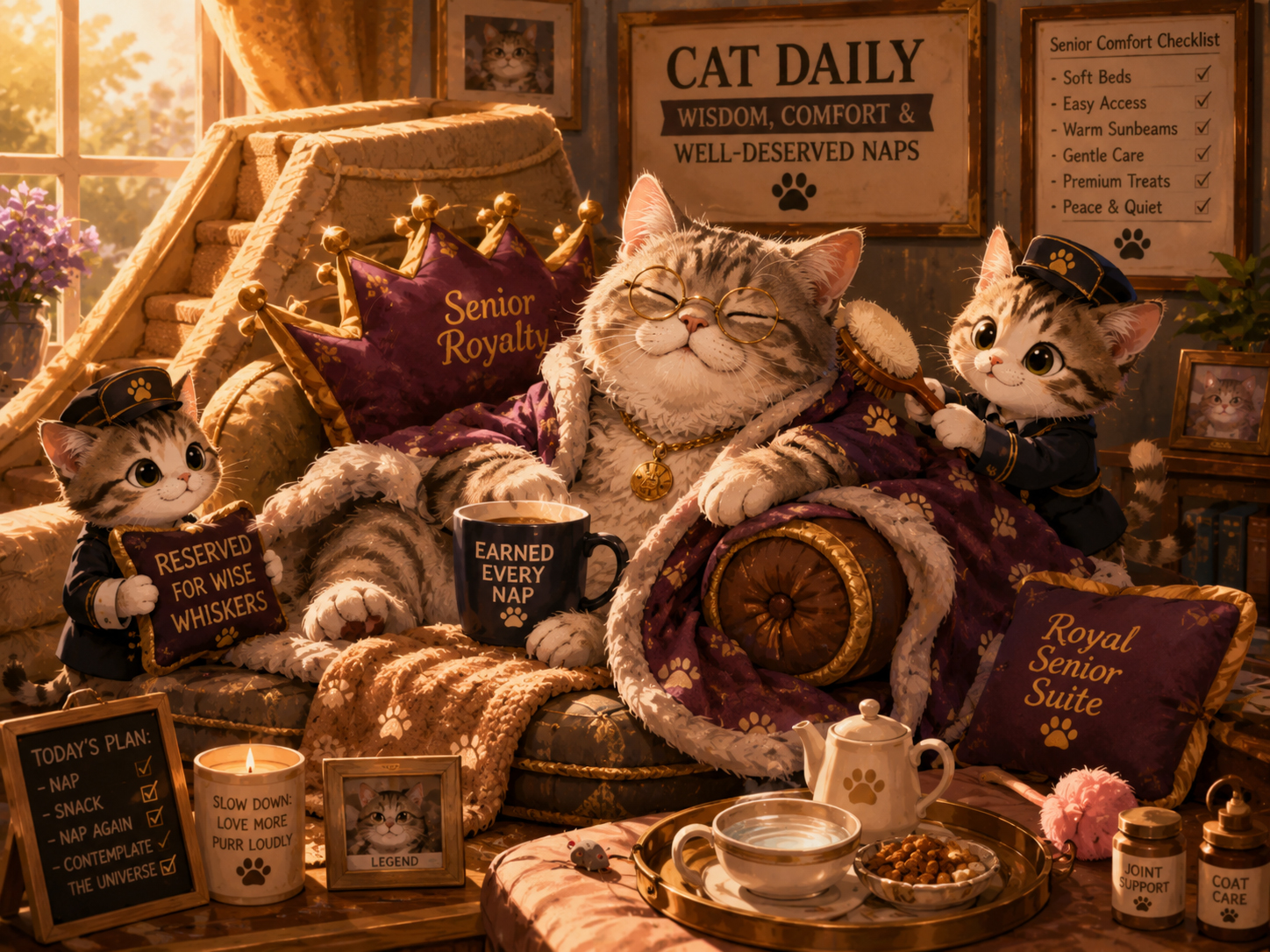
Older cats may need easier access to food, water, litter boxes, resting places, ramps, softer beds, warmer areas, and quieter routines. Small changes in mobility, appetite, weight, thirst, grooming, or behavior can matter more in senior cats.
When to call a veterinarian
Contact a licensed veterinarian when you notice significant or sudden changes. Seek urgent help if a cat is struggling to breathe, unable to urinate, repeatedly vomiting, collapsing, severely weak, injured, in obvious pain, not eating, or acting dramatically different from normal.
Dr. Pawprint’s “human staff” routine
Food, water, box
Check appetite, fresh water, and litter-box signs. The cat may supervise with judgmental silence.
Play and observe
Offer movement, hunting games, scratching, climbing, and attention. Notice what feels different.
Body and coat scan
Gently notice coat condition, weight changes, lumps, tenderness, nails, ears, eyes, and teeth.
Vet relationship
Keep regular veterinary care. A known baseline helps when something suddenly changes.
Closing diagnosis: observe the cat, not the myth
Cats are independent, but they are not invincible. “The cat is hiding” may be personality, or it may be a clue. “The cat is picky” may be preference, or it may be discomfort. “The cat is acting weird” may be comedy, or it may be the first headline of a health story.
Dr. Pawprint’s final prescription: fresh water, clean litter, good food, safe enrichment, gentle observation, and a real veterinarian when the meow report changes.