Indoor Cat Life
Build a better kingdom for the house lion
Indoor life can be safe, rich, funny, and deeply satisfying when the home gives cats room to be cats — not tiny roommates with no hobbies.
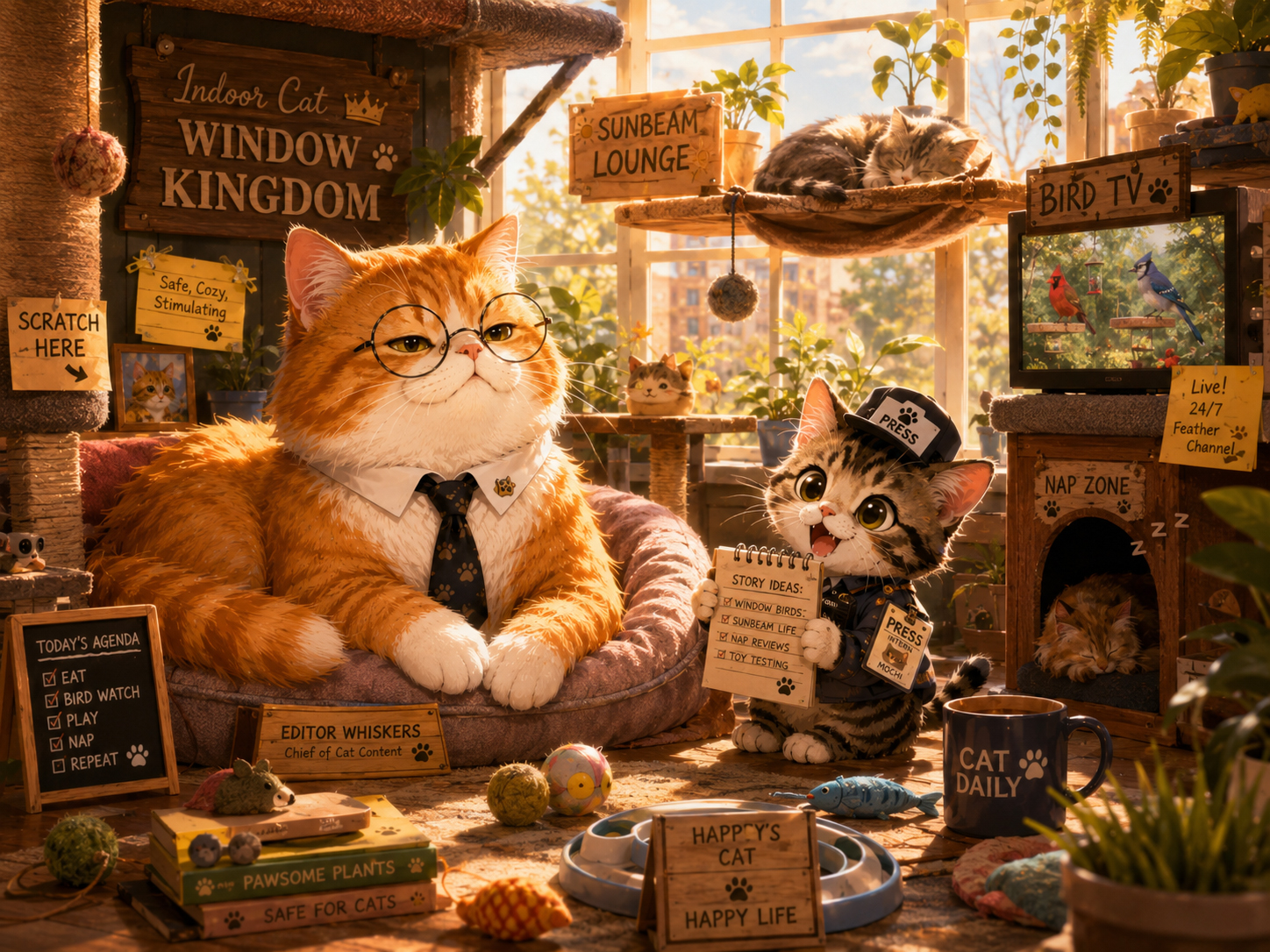
The big idea: indoor cats need a life, not just a room
Indoor cats can live excellent lives when their home supports normal feline behavior. That means climbing, scratching, hiding, resting, watching, playing, hunting games, territory routes, food puzzles, and predictable comfort.
Professor Purr says enrichment is not decoration. It is cat infrastructure. Editor Whiskers says the infrastructure should be placed near the best sunbeam.
The CatDaily indoor kingdom checklist
| Kingdom Feature | Why It Matters | CatDaily Translation |
|---|---|---|
| Window perch | Provides visual stimulation and safe observation. | Bird TV with executive seating. |
| Scratching posts | Supports claw care, stretching, marking, and stress relief. | The sofa needs legal competition. |
| Hiding places | Gives cats privacy and emotional safety. | Every monarch needs a private chamber. |
| Climbing options | Creates vertical territory and confidence. | High ground improves household supervision. |
| Toys and puzzles | Encourages movement, problem-solving, and play. | Make the tiny predator file paperwork for snacks. |
| Clean litter | Supports comfort, hygiene, and household peace. | Public works must function. |
Window life: Bird TV, sunbeams, and executive oversight
A safe window perch can be one of the best indoor-cat upgrades. Cats enjoy watching birds, people, leaves, weather, and suspicious delivery trucks. A soft perch, stable platform, and secure window area can turn a plain room into a daily theater.
Make sure screens are secure and the cat cannot push through, fall, or access an unsafe balcony. The cat may believe it can fly. The cat is incorrect.
Scratching: approve the right target
Scratching is normal behavior, not a moral failure. Indoor cats need acceptable scratching options that are stable, appealing, and placed where the cat actually wants to scratch.
Try different materials and shapes: vertical posts, horizontal scratchers, cardboard pads, sisal, carpet, or angled boards. Reward the cat for using the right target. Do not hide the scratcher in a forgotten corner and then blame the cat for preferring the sofa that sits in the middle of the kingdom.
Hiding places: privacy is healthy
Cats need safe places where they can retreat without being dragged back into human democracy. A hiding place can be a covered bed, box, tunnel, shelf cubby, closet corner, or soft cave.
Hiding can be normal rest or stress relief. Sudden, extreme, or unusual hiding can also be a health clue, especially if it comes with appetite, litter-box, breathing, mobility, or mood changes.
Climbing and vertical territory
Many cats feel safer and more confident when they can climb. Cat trees, shelves, window platforms, stable furniture routes, and perch systems can help indoor cats move vertically and observe the household from a higher station.
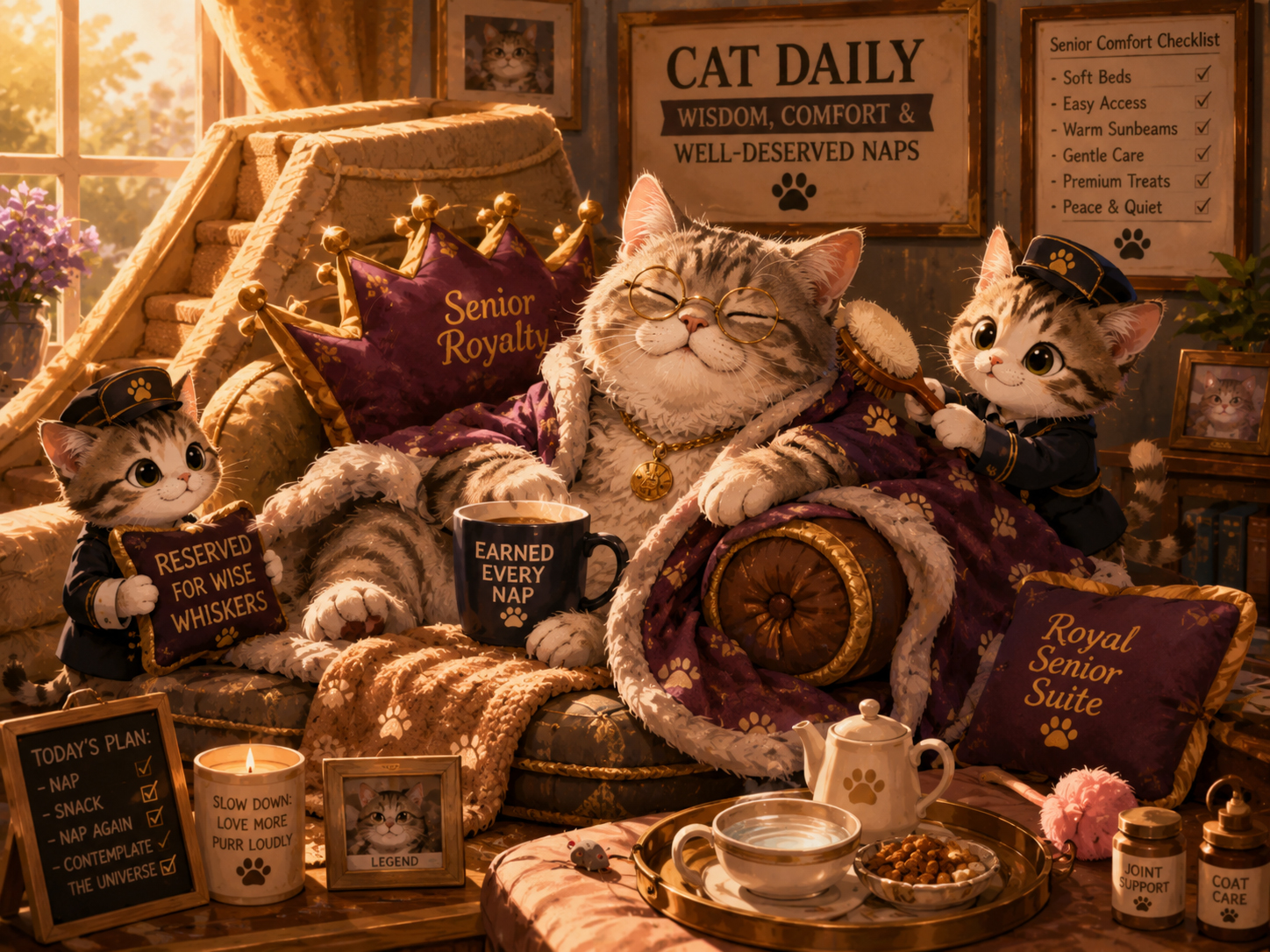
For kittens and senior cats, adjust difficulty. Mochi may climb like a rocket. The senior monarch may prefer steps, ramps, and a stable low throne.
Play: the indoor hunting department
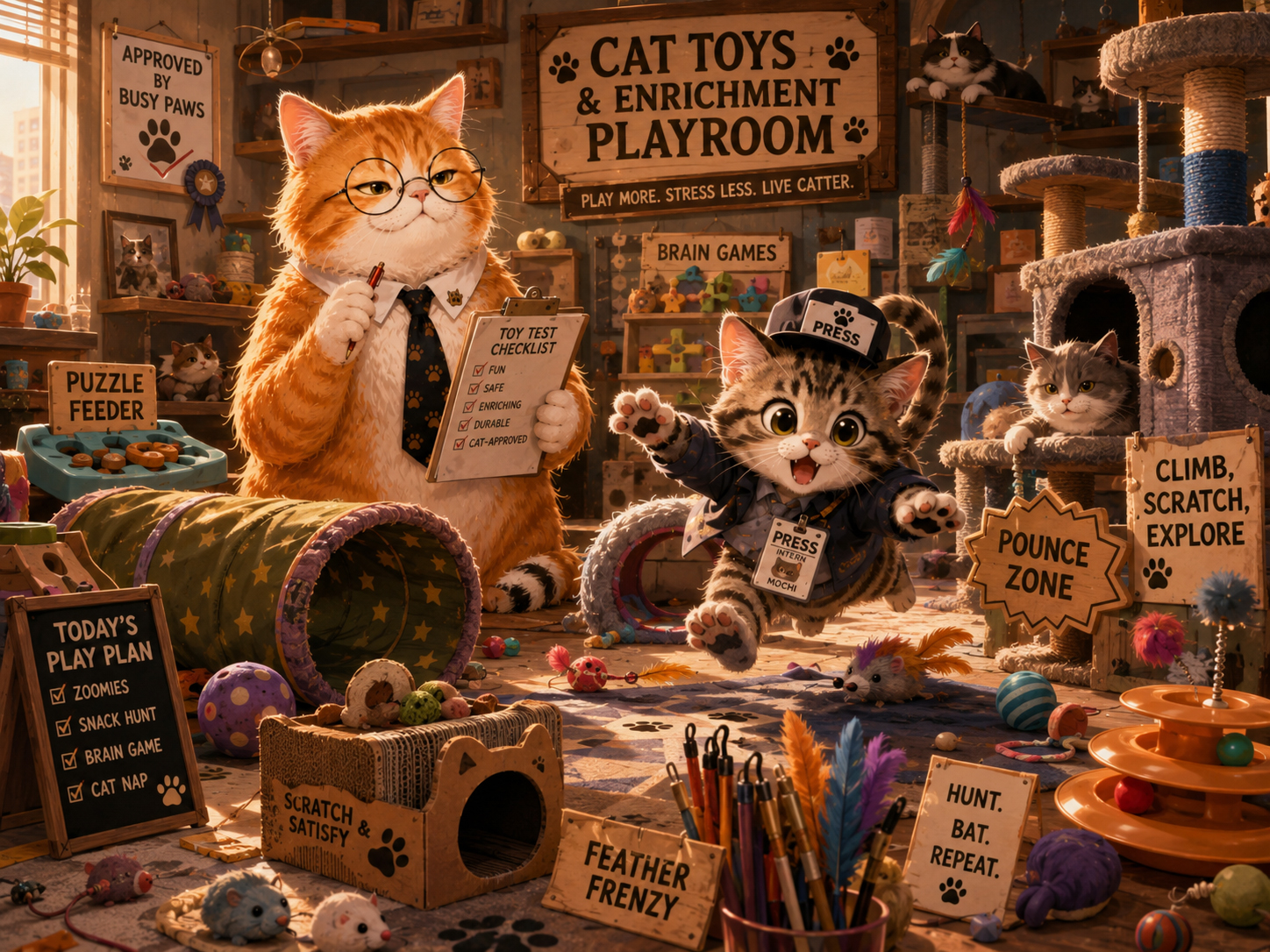
Indoor cats need chances to stalk, chase, pounce, bat, and “capture” toys. Wand toys, toy mice, balls, tunnels, kicker toys, food puzzles, and treat hunts can all help.
Short, regular play sessions often work better than one giant festival of exhausted humans and mildly interested cats. End play with a satisfying catch when possible. A cat who never catches the toy may begin questioning management.
Food puzzles and treat hunts
Food puzzles can add activity and mental work to snack time. Start easy. If the puzzle is too hard, the cat may not become enriched. The cat may become offended.
Treat hunts can be simple: place a few small treats in safe, easy-to-find spots and let the cat search. Keep portions reasonable and do not let treats replace balanced meals.
Litter box comfort
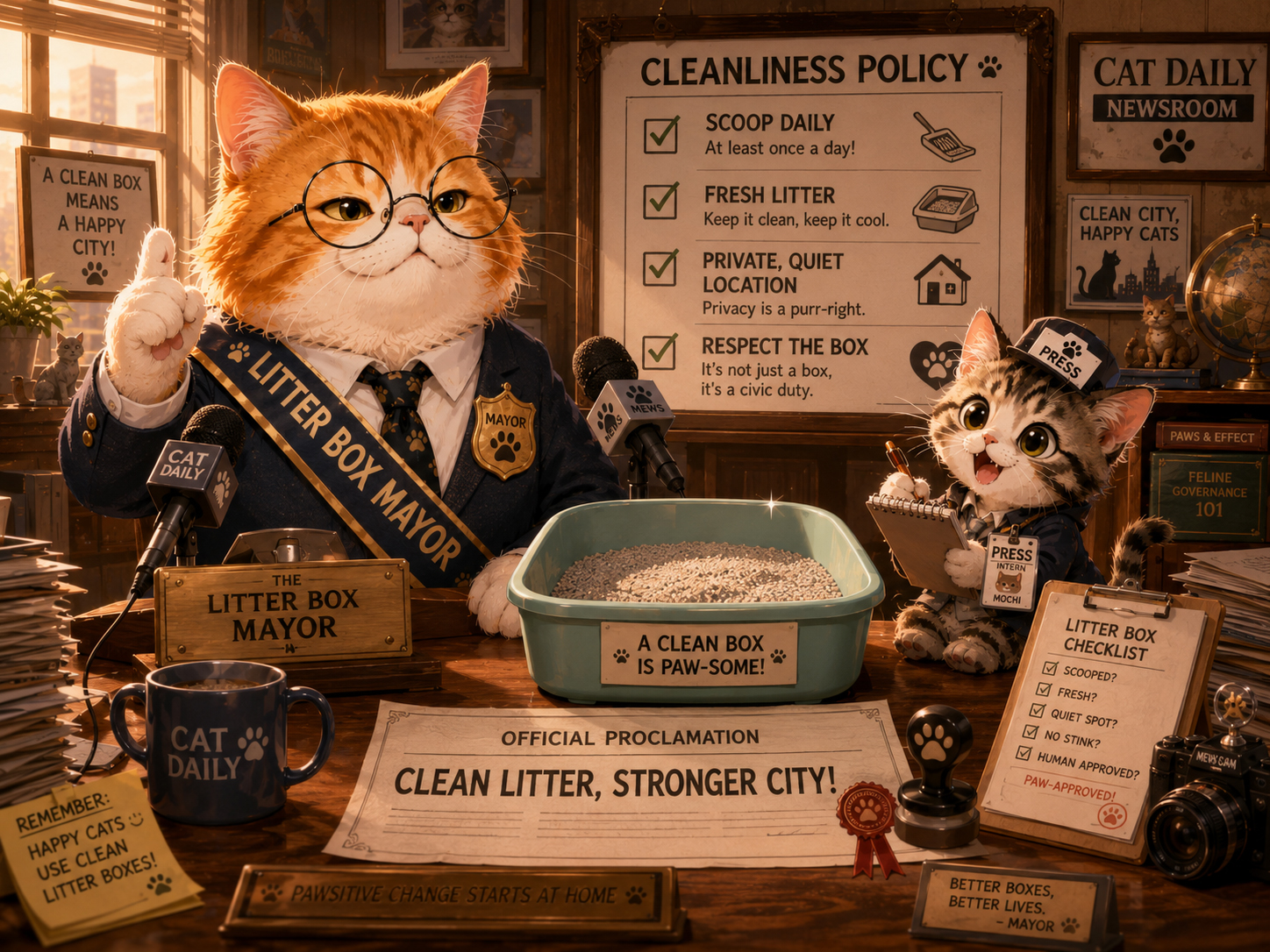
Indoor cats rely completely on the litter-box setup you provide. Cleanliness, location, access, box size, and privacy matter. A dirty or inconvenient box can create stress, avoidance, or household rebellion.
The Litter Box Mayor recommends daily scooping, fresh litter, quiet placement, and enough boxes for the household. The mayor also recommends that humans stop acting surprised when cats have standards.
Indoor safety: the kingdom must not be booby-trapped
Indoor safety means thinking like a cat with poor judgment and excellent jumping skills. Secure cords, windows, screens, balconies, toxic plants, medications, chemicals, sharp objects, small swallowable items, plastic bags, strings, ribbons, yarn, and dangerous appliances.
Check recliners, washers, dryers, closets, drawers, and garages before closing or operating them. Cats are experts at entering forbidden areas and then acting like the problem is poor hospitality.
Multi-cat indoor homes
More cats need more resources. Provide multiple food and water stations, litter boxes, resting spots, scratching options, and escape routes. Conflict can be subtle: staring, blocking, chasing, guarding, or forcing another cat away from resources.
A peaceful multi-cat kingdom has choice. Cats should not have to cross enemy territory to use the box or drink water.
Routines: cats like predictable weirdness
Indoor cats often appreciate routine: meals, playtime, quiet rest, grooming, and bedtime patterns. Predictability can reduce stress, especially when visitors, moves, new pets, or home changes occur.
This does not mean life must be boring. It means the cat should know that the kingdom is stable even when the intern knocks papers off the desk.
When indoor behavior is a health clue
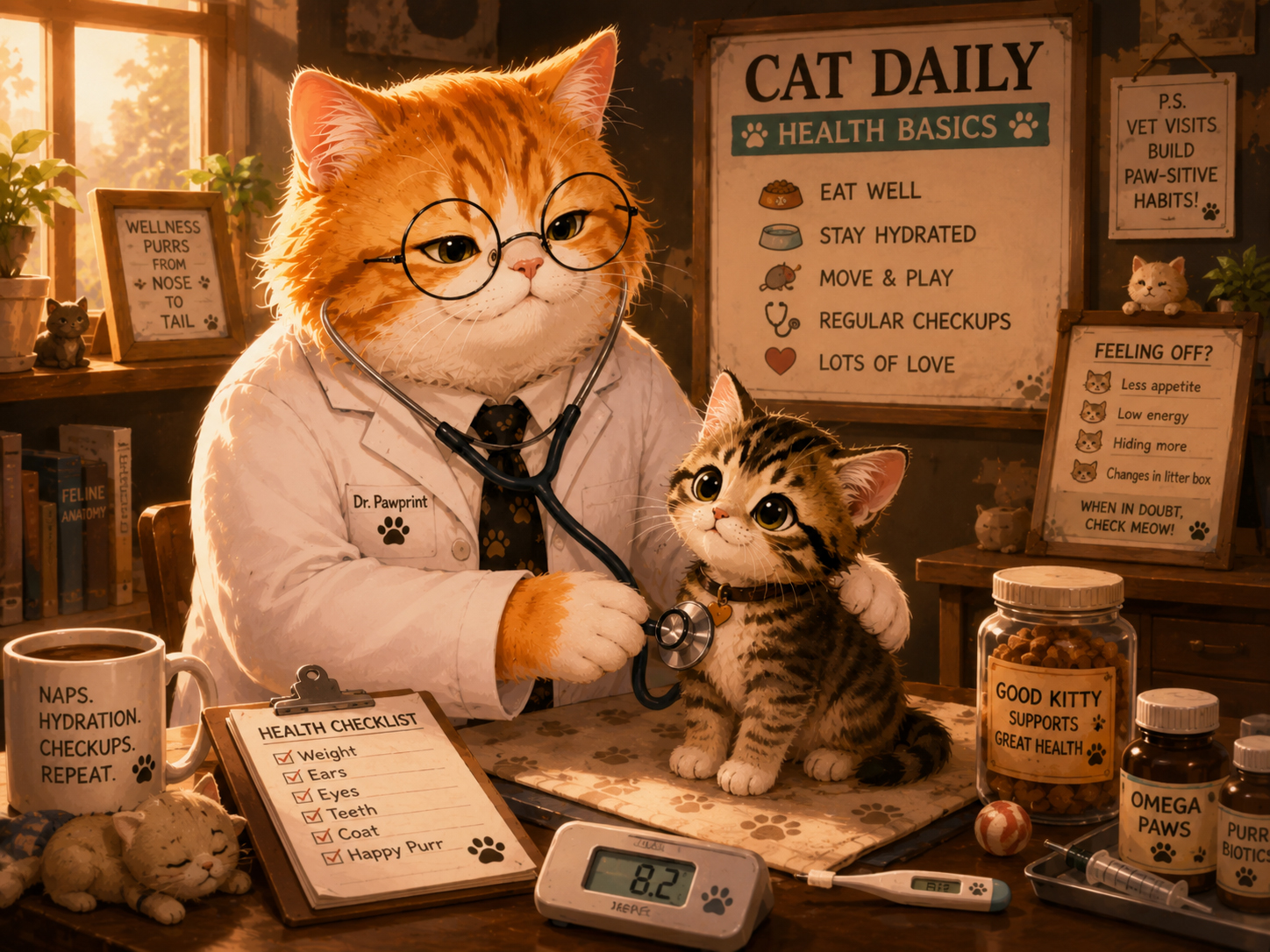
Indoor cats may show health concerns through behavior: hiding, reduced play, appetite changes, litter-box changes, increased thirst, poor grooming, irritability, new aggression, or avoiding favorite spots.
The official indoor departments
Safe observation
Create stable perches and secure windows so the cat can monitor birds, clouds, and suspicious neighbors.
Approved claw work
Offer strong scratchers in useful places. The sofa should not be the only public monument.
Rest and retreat
Provide soft beds, hiding spots, quiet zones, and places where the cat is not constantly interrupted.
Daily enrichment
Rotate toys, offer hunting games, use puzzle feeders, and give the house lion something legal to do.
Closing report: make the house worth ruling
Indoor cats do not need a mansion. They need a thoughtful kingdom. A few good perches, clean litter, safe hiding spots, play routines, scratching rights, water stations, and comfortable rest zones can dramatically improve indoor life.
CatDaily’s final decree: open the curtains, secure the window, clean the box, rotate the toys, respect the nap, and remember that a cat with a meaningful indoor life is less likely to turn your bookshelf into a government protest.