CatDaily Manga Episode
Episode 8: Professor Purr Explains Cat Logic
A Season One finale about the secret grammar of cats: paws, tails, eyes, ears, posture, routines, territory, affection, fear, and the sacred science of sitting in the wrong place at the right time.
Scene 1: The classroom opens
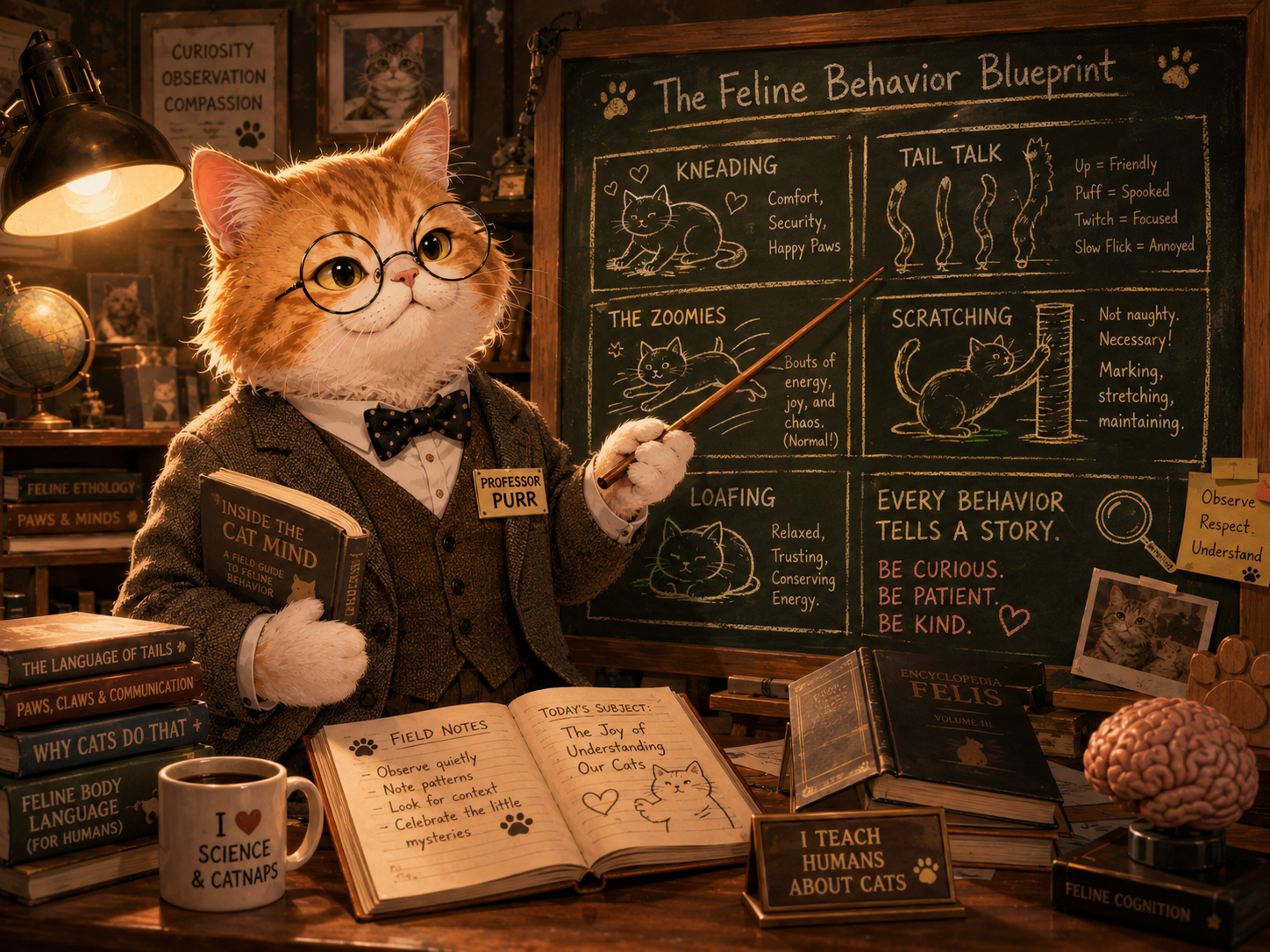
The CatDaily newsroom has been rearranged into a classroom. A chalkboard stands at the front. Editor Whiskers sits in the first row, looking serious. Madame Tuna sits beside him, looking expensive. Mochi sits in a pencil cup.
Professor Purr taps the chalkboard.
Mochi raises a paw. “Because the cat is correct?”
Professor Purr nods. “A promising thesis, but incomplete.”
Scene 2: The central theory
Professor Purr writes:
“Humans often see one behavior and jump to a conclusion,” he says. “But cats speak in patterns. You must read the room, the timing, the body, the history, and the snack situation.”
Madame Tuna whispers, “The snack situation is always relevant.”
Scene 3: Kneading, also known as the biscuit factory
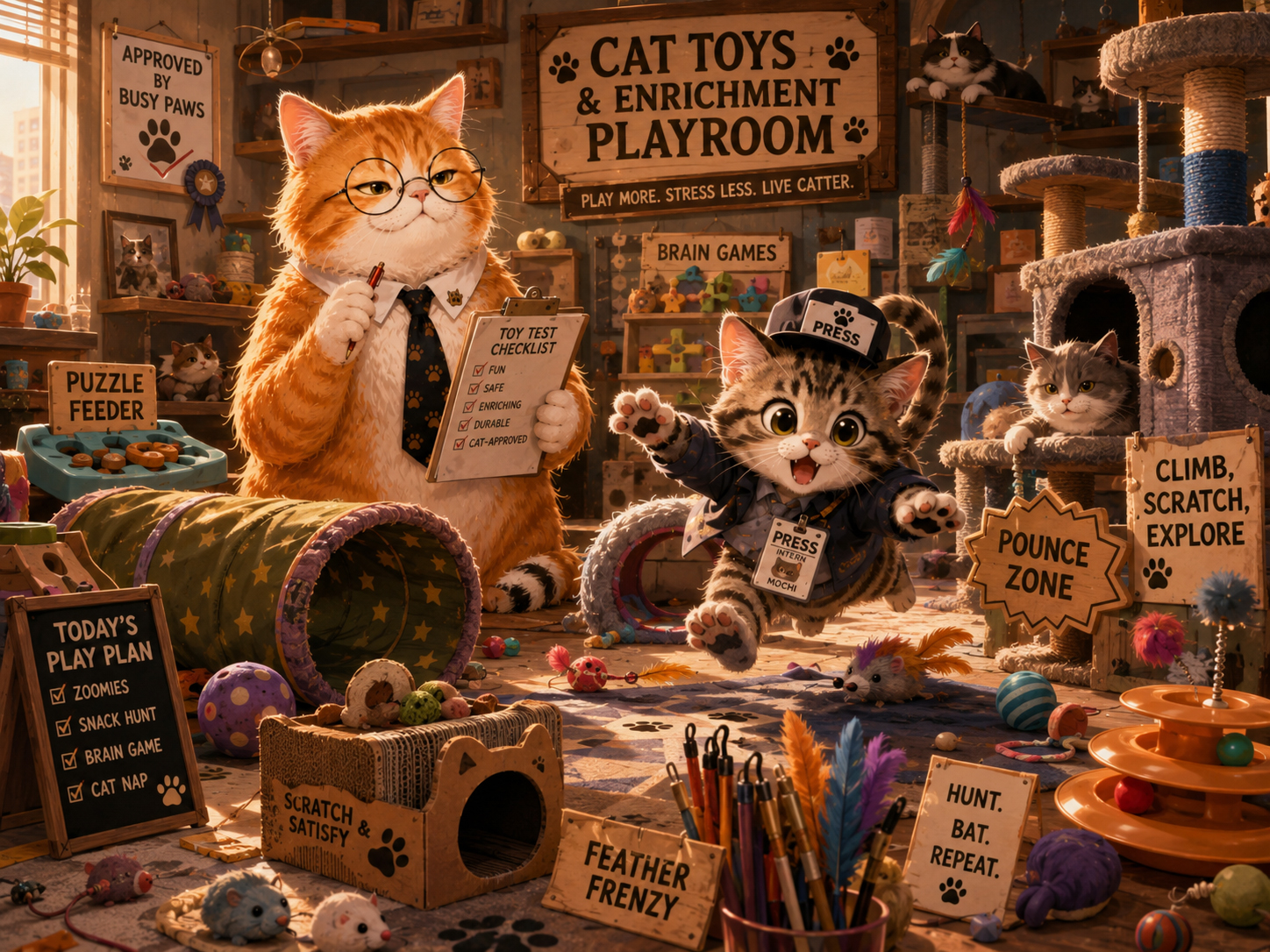
Mochi climbs onto a blanket and begins kneading with intense professionalism.
“Kneading often shows comfort, relaxation, security, or happy paws,” says Professor Purr. “It may be connected to kittenhood and soothing behavior.”
Editor Whiskers adds, “It is also textile quality control.”
The class writes that down.
Scene 4: The loaf
Professor Purr draws a cat with all paws tucked underneath.
“The loaf can mean rest, comfort, warmth, or calm alertness,” he explains. “But context matters. A relaxed loaf is different from a tense, painful, withdrawn loaf.”
Mochi squints. “So some bread is suspicious?”
“Correct,” says Professor Purr. “Suspicious bread should be observed.”
Scene 5: Scratching is not vandalism
The chalkboard now shows a sofa on trial.
“Scratching supports claw care, stretching, scent marking, territory, and stress relief,” says Professor Purr. “It is normal cat behavior. The solution is better scratching options, not courtroom drama with the sofa.”
Editor Whiskers raises a paw. “What if the sofa is guilty?”
“The sofa may be appealing,” says Professor Purr. “That is different from guilty.”
Scene 6: Tail talk
Professor Purr draws a row of tails: upright, puffed, flicking, wrapped, low, twitching.
“Tail language is useful, but never read the tail alone. Read ears, eyes, posture, whiskers, voice, movement, and situation.”
Mochi flicks her tail.
“What does this mean?” she asks.
Professor Purr studies her. “Interest, mischief, and a 72% chance you are about to knock over that eraser.”
Mochi knocks over the eraser.
Scene 7: Slow blinks
Editor Whiskers slowly blinks at the class.
The room becomes quiet.
“A slow blink can be a soft social signal,” says Professor Purr. “Often it suggests relaxation or trust. Humans may slow blink back, but should not ruin the moment by grabbing the cat.”
Madame Tuna writes, “Affection must not be handled like a coupon.”
Scene 8: Hiding
Mochi disappears into a box labeled “Teaching Materials.”
Professor Purr continues, “Hiding can be normal rest, privacy, or stress reduction. But sudden hiding, severe hiding, or hiding with appetite, litter-box, breathing, mobility, or mood changes can be a health clue.”
From inside the box, Mochi says, “I am doing educational privacy.”
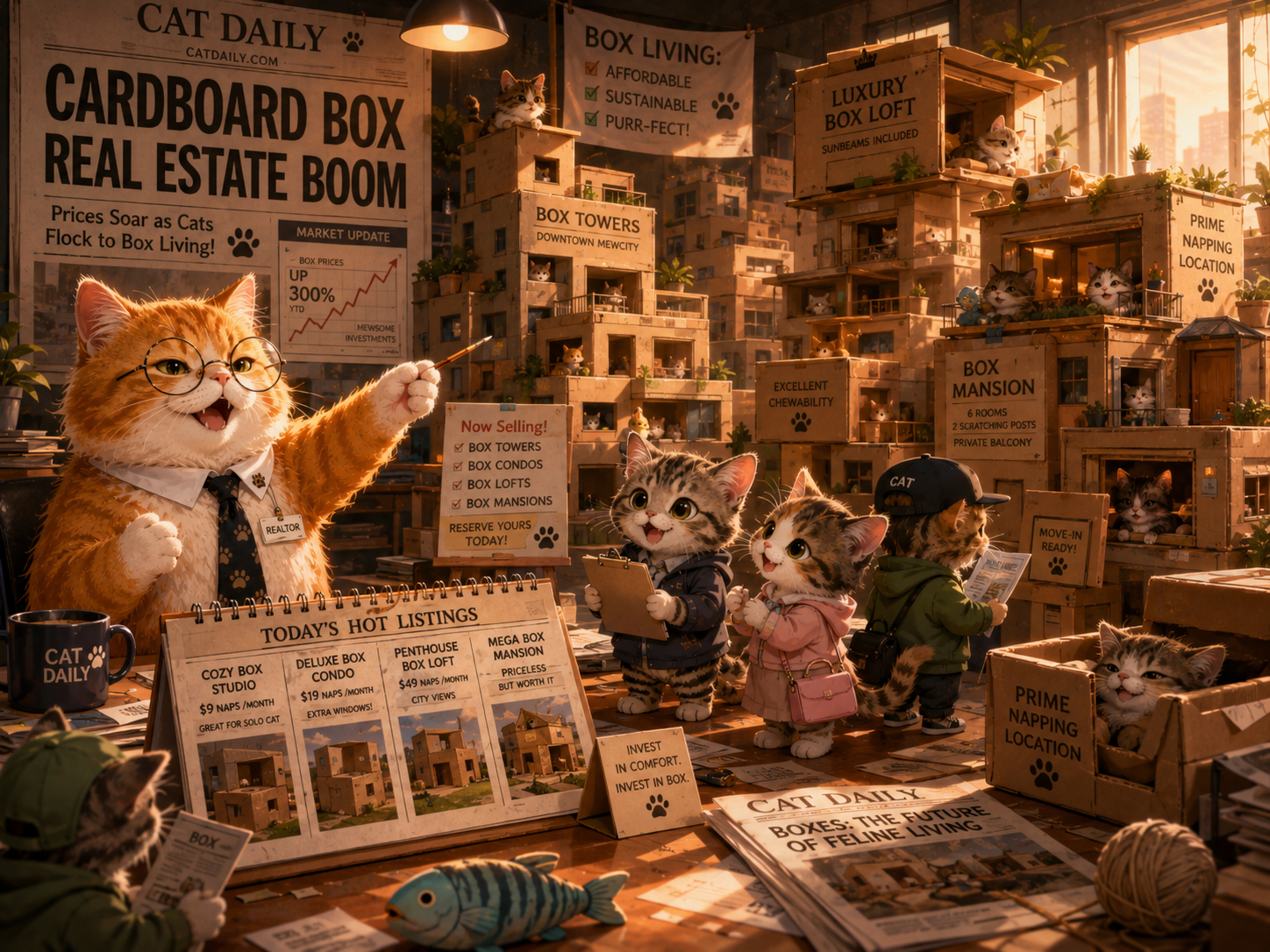
The Cat Logic Translation Chart
| Behavior | Possible Meaning | Human Translation |
|---|---|---|
| Kneading | Comfort, security, affection, relaxation. | The biscuit factory is open. |
| Loafing | Resting, warmth, alert comfort, or sometimes discomfort. | Read the bread carefully. |
| Scratching | Claw care, stretch, marking, stress relief. | Provide a better legal scratching target. |
| Slow blink | Relaxation, trust, soft communication. | Blink back. Do not pounce on the moment. |
| Hiding | Privacy, fear, stress, illness, pain, or rest. | Respect hiding, but notice sudden changes. |
| Zoomies | Energy release, play drive, excitement, routine cycle. | Play earlier, clear the runway, enjoy the thunder. |
Scene 9: Closed-door philosophy
A student asks, “Why does a cat need to inspect every closed door?”
Professor Purr draws a door and labels it Unknown Territory.
“Cats are territorial and curious,” he says. “A closed door creates mystery, blocked access, and possible human activity without cat supervision.”
Editor Whiskers says, “Unsupervised humans are risky.”
Mochi nods. “They move snacks.”
Scene 10: The final exam
Professor Purr hands out the final exam.
Question one: “A cat flicks her tail while sitting near a food bowl. What does it mean?”
Mochi writes, “Snack politics.”
Madame Tuna writes, “Insufficient purr-sentation.”
Editor Whiskers writes, “Need more evidence.”
Professor Purr smiles. “Editor Whiskers is correct. Context first.”
Scene 11: When behavior needs help
Professor Purr turns serious.
“Many behaviors are normal. But sudden behavior change matters. A cat who stops eating, hides unusually, becomes aggressive, avoids the litter box, limps, breathes strangely, vomits repeatedly, or seems weak may need a veterinarian.”
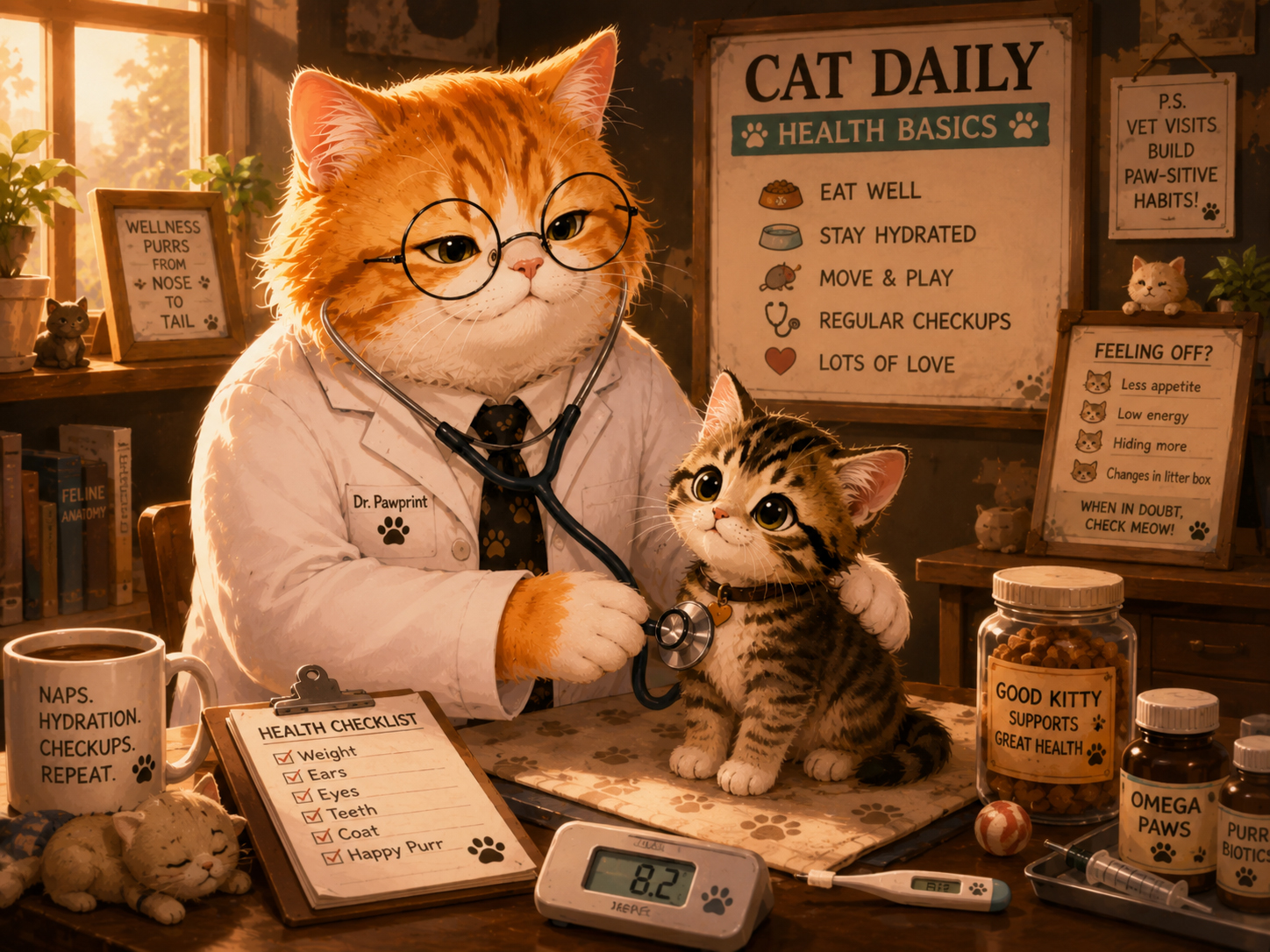
Mochi’s Cat Logic study notes
Read the whole scene
Timing, location, body language, routine, people, pets, and snacks all matter.
Do not read one clue alone
Tail, ears, eyes, whiskers, posture, voice, and movement work together.
Give better options
Scratchers, hiding places, toys, perches, clean boxes, and safe routines reduce chaos.
Changes matter
Sudden behavior changes can point to pain, illness, stress, fear, or discomfort.
Scene 12: Graduation
Professor Purr lowers the chalk and addresses the class.
“You now understand the first rule of cat logic: the cat is not random. The cat is communicating in cat.”
Mochi raises her paw. “Do we get diplomas?”
Professor Purr hands out certificates reading:
Editor Whiskers inspects his certificate and says, “Acceptable. Needs more tuna.”
The final Season One headline appears:
Episode takeaway
Cat logic becomes easier when humans stop asking, “Why is my cat weird?” and start asking, “What is my cat responding to?”
CatDaily’s final Season One ruling: observe first, judge later, provide better outlets, watch health clues, respect the nap, and remember that the cat is not being mysterious. The cat is filing reports in another language.